Become a Medical Reserve Corps Volunteer

"The number one lesson we learned from our experience in the wake of Tropical Storm Irene is that Vermonters take care of each other."
Volunteer for the Corps
Local health, safety, and preparedness begins with you!
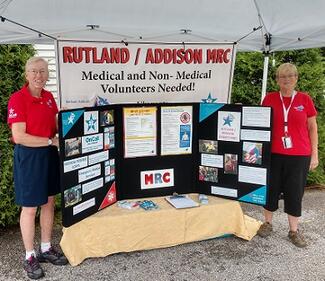
Medical Reserve Units are an organized way to draw upon Vermonters' good will and instinct to help their friends and neighbors. Units offer both medical and non-medical volunteers a chance to join a network of people who are trained and ready to respond to an emergency.
Volunteer doctors, nurses, pharmacists, dentists and EMTs learn how to assist in the response to a disaster affecting their communities. Even if you have no medical training, we encourage you to join a local MRC. Volunteers are provided valuable training free of charge, and they learn how to prepare themselves and their families during an emergency.
• SIGN UP TODAY •
Register with the Vermont Emergency Response Volunteer System
Why Volunteer
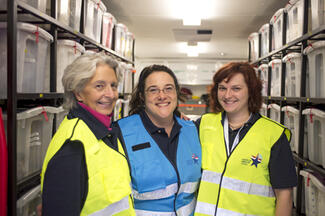
We saw it during Tropical Storm Irene - when a disaster strikes, the first response is always local. Medical Reserve Corps volunteers help ensure our communities are ready for a large-scale emergency or public health crisis.
- Share your abilities
- Develop new skills through free training
- Give back to your community
Did you know that volunteering is also good for your health?
Research presented by the Corporation for National and Community Service shows a strong relationship between volunteering and health: those who volunteer have lower mortality rates, greater functional ability, and lower rates of depression later in life than those who do not volunteer.Learn more about the Health Benefits of Volunteering.
How to Volunteer
- Sign up today - Register as a Vermont Emergency Response Volunteer
- Call or email your local MRC unit. You'll get information about the MRC, including how to join, about unit, and training activities.
If there isn't yet a MRC unit near you, help establish a unit in your community, or stay connected for when one is created.
Training
All Vermont MRC volunteers have a basic level of training requirements. These training requirements are consistent with the MRC Core Competencies.
This ensures that all Vermont MRC volunteers have completed the same minimum level of training. Volunteers will be trained in the following:
- MRC Orientation
- ICS 100
- ICS 700
- IS 22 or a family preparedness plan
Each Vermont MRC unit will provide the standard basic level of training. Once a volunteer has met those requirements, the unit coordinator can expand on advanced training and exercises, such as:
- CPR & First Aid
- Psychological First Aid
- Bloodborne Pathogens
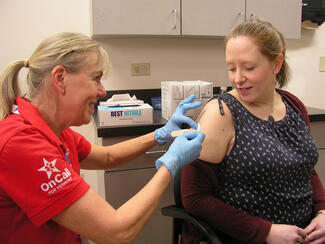
- Vaccination Distribution & Dispensing - Point of Dispensing (POD)
- Local Emergency and Health Procedures
- Use of Specialized Equipment
- Shelter Management
- Emergency Exercises
For more information
Contact the Vermont State MRC Coordinator
Charles Deasy, Interim MRC Coordinator
Vermont Department of Health
Office of Public Health Preparedness
802-863-7484
charles.deasy@state.vt.us