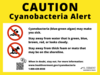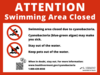
Blue-Green Algae in Lake Champlain

Call 1-800-439-8550 to Report a Blue-Green Algae Bloom

Why be Concerned about Blue-Green Algae?

blue-green algae bloom in QuebecBlue-green algae, (cyanobacteria) are a common and natural component of the microscopic plants (plankton) in Lake Champlain. Some kinds of blue-green algae produce natural toxins or poisons. When these algae die and break down, toxins can be released into the water.

If animals ingest the toxin, they can be quickly paralyzed and die. Signs of poisoning include weakness, staggering, difficulty breathing, convulsions and death. Although there are no documented cases of human illness related to blue-green algae in Lake Champlain, during the summers of 1999 and 2000 the death of two dogs was attributed to blue-green algae poisoning, after drinking large amounts of contaminated water directly from the lake.

Blue-green algae can become very abundant in some sections of Lake Champlain once the water warms up in mid-summer. Particular problem areas are Missisquoi Bay and St. Albans Bay. Under calm conditions, blue-green algae can accumulate in thick layers at the surface or along the shoreline. These accumulations are frequently referred to as “blooms” or “scums.”

While blue-green algae toxins have been detected at many locations in Lake Champlain, the highest concentrations of toxins are usually found in blooms and shoreline scums. These dense accumulations pose the greatest potential risks to people and pets.

Weather influences where blue-green algae will accumulate in a given location. During extended periods of calm and sunny days, blooms can accumulate at the surface in any location. Wind and waves may cause them to form along shorelines or in protected areas. Shifts in wind direction can move a bloom from one location to another. Periods of cool rainy weather can often lead to the disappearance of a bloom.

Return to Top

Monitoring for Blue-green Algae

UVM Rubenstein LaboratoryThe University of Vermont’s Rubenstein Ecosystem Science Laboratory is conducting a monitoring program for blue-green algae, in order to identify locations around Lake Champlain where there may be a potential risk to people and pets.

Working with the Vermont Department of Environmental Conservation, the Rubenstein Lab is monitoring 14 stations around all of Lake Champlain about every two weeks. The lab samples additional sites in Missisquoi Bay, St. Albans Bay, and Burlington Bay on a weekly basis once a bloom occurs.

taking a sample of a blue-green algae bloomBecause the highest concentrations of toxins are found in shoreline locations where scums can form, and the shorelines are where most people recreate, the Rubenstein Lab has developed a special program focused on these locations.

Working with the Lake Champlain Committee, the lab has recruited a group of citizen volunteers that monitor about a dozen shoreline sites in Missisquoi Bay, St. Albans Bay, the north lake and islands area, and the south lake. These citizen volunteers watch for blooms and take weekly samples that the Rubenstein Lab can analyze for the presence of toxins.

Conditions in Lake Champlain

The Rubenstein Lab uses its data to provide weekly information about blue-green algae conditions around the lake. This information is reported on a newly created status map, showing the general conditions in various sections of the lake, using the following three classifications:


Return to Top