
Controlling Asthma


What Is Asthma?

Asthma is a chronic disease in which the lungs become inflamed and react to "triggers." There are many kinds of triggers and they are different for different people. Common ones include pet dander, foods, pollens, mold, mildew and dust.

When the lungs become irritated the airways swell and mucus builds up in them causing shortness of breath, coughing, wheezing, chest pain or tightness, tiredness or a combination of these symptoms. Often people with severe asthma have difficulty sleeping and breathing.

If people with asthma get an accurate diagnosis, learn what triggers an attack, take their medications and avoid triggers, their asthma can usually be controlled.

Return to Top

Causes of Asthma

It is not clearly known why or how people develop asthma. Asthma can begin in early childhood or may first appear later in life. Not all childhood asthma continues into adulthood.

Research suggests that a number of things come together to produce asthma. Family history of asthma, respiratory infections in young children, exposure of toddlers to tobacco smoke, house dust mites, or cockroach droppings are a few of the things that may lead to asthma.

A variety of triggers can lead to an asthma attack in a sensitive individual. Among these are cat or dog dander, cockroach droppings, house dust mites, tobacco smoke, fungi or molds and viruses.

People react to specific indoor or outdoor air pollutants and triggers. Although getting rid of indoor triggers will not prevent asthma episodes if the individual is not sensitive to the particular trigger, getting rid of triggers will reduce asthma attacks in people who are sensitive to them.

Return to Top

Controlling Asthma

Asthma is a very individual condition. Some forms of it are more difficult to manage than others. Most people who have asthma can learn how to get it under control. But getting it under control does not just happen. It takes effort to learn what triggers an individual person's asthma and persistence in following the treatment plan.

Many adults with asthma are not sure that they have it or do not understand what is needed to live well if they have asthma. Others lack faith in their ability to do what they believe is needed. Sometimes people who have asthma do not consider it a chronic condition. They may think of it as an acute "some time thing," not a chronic condition requiring ongoing care.

Parents of children who have asthma may not know what to do to successfully manage it. They may not know that smoking can cause asthma in young children and can trigger an attack in people who already have it. Or, they may not want their child to do normal things because they are afraid of an asthma attack.

Some families with children who have difficult-to-manage asthma may need community supports such as asthma education groups or asthma camps in order to learn how to successfully manage their asthma.

Older people with asthma may not realize they have it or may not be getting appropriate medications to deal with it. They need to work with their doctor to determine whether they have asthma or some other lung disease that requires different treatment.

Although it may take awhile to understand what is required for a particular child or adult to learn how to best manage his or her asthma, research shows that getting an individual Vermont Asthma Action Plan, (written asthma management plan), using the right asthma medicine and working to avoid triggers helps people get their asthma under control.

Return to Top

Living Well with Asthma

The following links to information and resources about asthma will help you learn how people with asthma can lead healthy lives. Health Department staff have reviewed each of these links and think they will be useful to people who are looking for ways to cope with asthma. For access to other web sites go to the Links section of the Toolbar.

Return to Top

What You Can Do About Asthma

Managing asthma well is the responsibility of the person who has it and his or her family. But good asthma care is a team affair. It requires a working relationship between the patient and his or her physician, and, when a child is involved, with the school nurse. The "asthma team" works together by talking regularly to solve problems, review the medications, and check the effectiveness of the asthma management plan.

One of the best ways to ensure proper asthma control is to get a Vermont Asthma Action Plan (written management plan).

Call your doctor and ask for a Vermont Asthma Action Plan. This plan should describe exactly what needs to be done to keep away from asthma triggers, recognize and treat asthma episodes and keep you well by reminding you to take your medications.

For more details about how to control your asthma

Most importantly for your health and the health of your children

Don't smoke. Live in a smoke-free environment. Smoking can make you and others sick. For information about the connection between smoking and asthma see

Resources To Help You Quit

Finally

Work with people in your local community to improve asthma care.

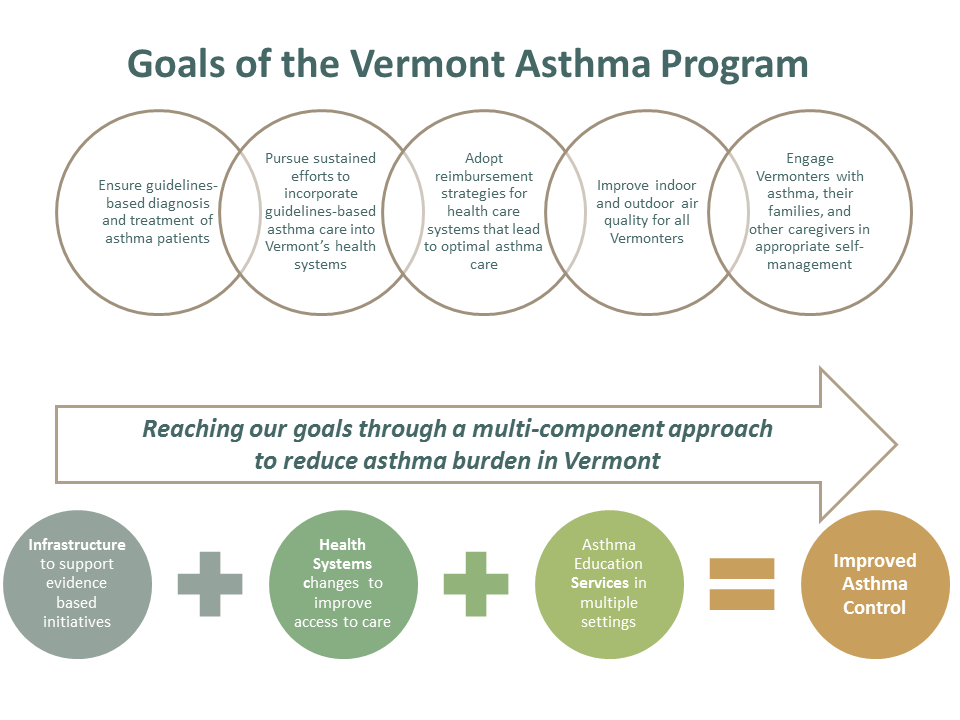
For information about state efforts to improve asthma care see the Vermont Asthma Prevention Plan 2003 or contact:

The Asthma Program Coordinator
Vermont Department of Health
108 Cherry Street, PO Box 70
Burlington, VT 05402
1-800-439-8550

Return to Top